
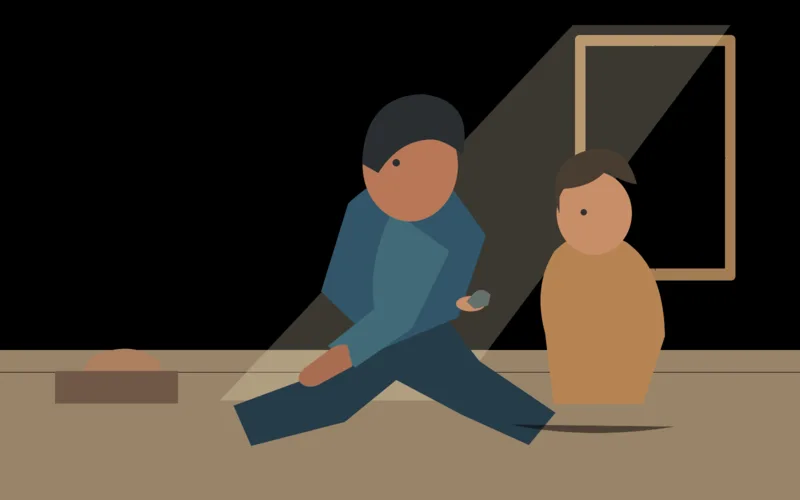
A young child may bring you a pebble, a half-finished sentence, or a feeling too large for the words available. You do not have to turn each moment into a lesson. Sometimes the useful move is to stop, notice, and answer the thing actually in front of you.
This is especially worth practicing with toddlers and preschoolers, who may communicate through play, gesture, and expression as much as speech. The CDC’s guidance on connecting and communicating with young children recommends giving a child your attention, reflecting what you hear, and describing what they are doing. It is guidance for caregivers, not a promise that one conversation will change a child's development.
Follow the small invitation
When a child shows you something, pause if you safely can. Get close enough to share the moment. You might say, “You found a smooth stone,” or “You’re showing me the tower you made.” Then leave room for a reply, a gesture, or more play.
The Harvard Center on the Developing Child describes responsive back-and-forth exchanges between a young child and caring adult as important to development. That is the broader developmental idea. The stone and tower lines are examples of how a caregiver might respond; they are not tested scripts.
Reflect before you correct
If the child is upset, try naming what you observe without pretending to read their mind: “That looked frustrating. Did you want another turn?” If you guessed wrong, let the child correct you. The CDC describes active listening as attention and reflecting a child’s words or possible feelings. It does not require a perfect sentence or forced eye contact. Adapt how you listen to the child’s communication style, abilities, and comfort.
A limit may still be needed. Listening first does not mean agreeing to an unsafe request. You can say, “I hear that you’re angry. I won’t let you hit. We can step back together.” That wording is an example, not a clinical technique or a guaranteed way to calm a child.
Make it ordinary
Choose one moment today when your attention can be undivided for a minute or two: after school, beside the sink, or while putting toys away. Notice what the child offers. Answer it. If you miss the moment, come back later without making a speech about failure.
If you are concerned about a child’s communication or development, speak with a qualified pediatric clinician. This general caregiving guidance is not individualized developmental or behavioral advice.